
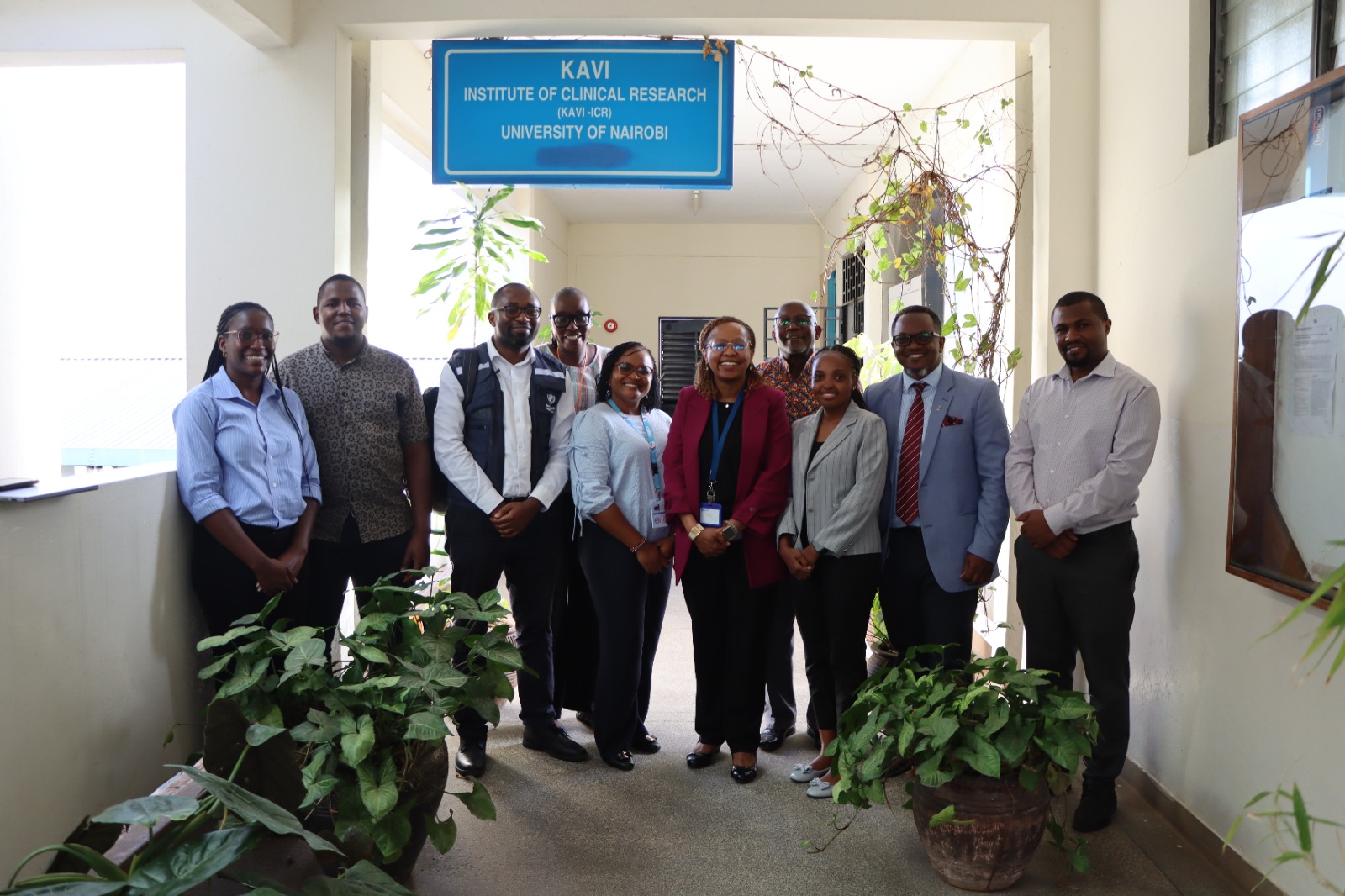
KAVI-Institute of Clinical Research at the University of Nairobi is contributing research expertise to Kenya’s Ebola response, with Senior Scientist Prof. Omu Anzala co-leading the research pillar of the national Ebola task force. The pillar brings together multidisciplinary expertise to identify research priorities and generate evidence to inform the national response.
Kenya announced its first imported case of Bundibugyo virus disease on 6 October 2026. According to the Ministry of Health update dated 26 October, nine cases had been confirmed, including two deaths, while seven patients remained stable and receiving treatment. Twenty contacts had also completed 21 days of symptom-free monitoring and been released from quarantine.
Evidence for a response that keeps improving
The research pillar has identified priority areas including social science, case management, vaccine use and surveillance at points of entry. Its work aims to generate locally relevant evidence to strengthen Kenya’s outbreak response and preparedness, working alongside national and international partners.
Prof Omu Anzala stated, “A response is only as strong as the evidence behind it. On the research pillar, our job is to make sure that the decisions Kenya takes on cases, contacts, vaccines and surveillance are informed by data generated here, with our own patients and communities, and that the response keeps improving as we learn.”
Why the science matters now
Bundibugyo virus belongs to a different species from the Ebola virus targeted by the licensed vaccine Ervebo. Whether Ervebo protects people against Bundibugyo virus disease remains unknown. WHO recommends evaluating its use against Bundibugyo within research protocols to generate evidence on its effectiveness. www.who.int
Laboratory studies can help assess whether vaccine-induced antibodies recognise Bundibugyo virus and inhibit infection in experimental systems. Alongside clinical research, social science and surveillance, this work can help inform the development and evaluation of effective countermeasures.
Exploring antibody assay capacity at KAVI-ICR
KAVI-ICR is exploring the development of laboratory assays to study antibody responses to Bundibugyo virus. Binding assays assess whether antibodies recognise the virus’s surface protein, while neutralisation assays examine whether they can inhibit viral entry or infection in a laboratory test system.
Together, these approaches could help researchers understand immune responses following infection or vaccination. Developing this capacity would build on KAVI-ICR’s experience in vaccine research and strengthen Kenya’s capacity to contribute to outbreak research and preparedness.
Speaking on the research pillar of the outbreak response, KAVI-ICR’s director Prof. Marianne Mureithi stated, “Our priority is to ensure that Kenya’s research expertise contributes to the national response. At KAVI-ICR, we are exploring how our laboratory capabilities can help address scientific questions arising from this outbreak and strengthen preparedness for future outbreaks.”
Staying vigilant
The Ministry of Health says people leaving quarantine pose no risk to their families or communities and urges Kenyans to welcome them home, while stressing that vigilance must continue. The Ministry of Health communicates updates through authorised channels, and KAVI-ICR encourages the public to rely on them
A track record to build on
KAVI-ICR, based in the Faculty of Health Sciences at the University of Nairobi, brings together clinical research, immunology, laboratory science, social and behavioural research, community engagement and research training. Its experience in Ebola vaccine trials, participation in CEPI’s Centralized Laboratory Network and longstanding community partnerships provide a strong foundation for supporting Kenya’s outbreak response. Building on these strengths, the Institute aims to work with partners towards establishing a regional research and training hub for outbreak preparedness in East Africa.
- Log in to post comments


