
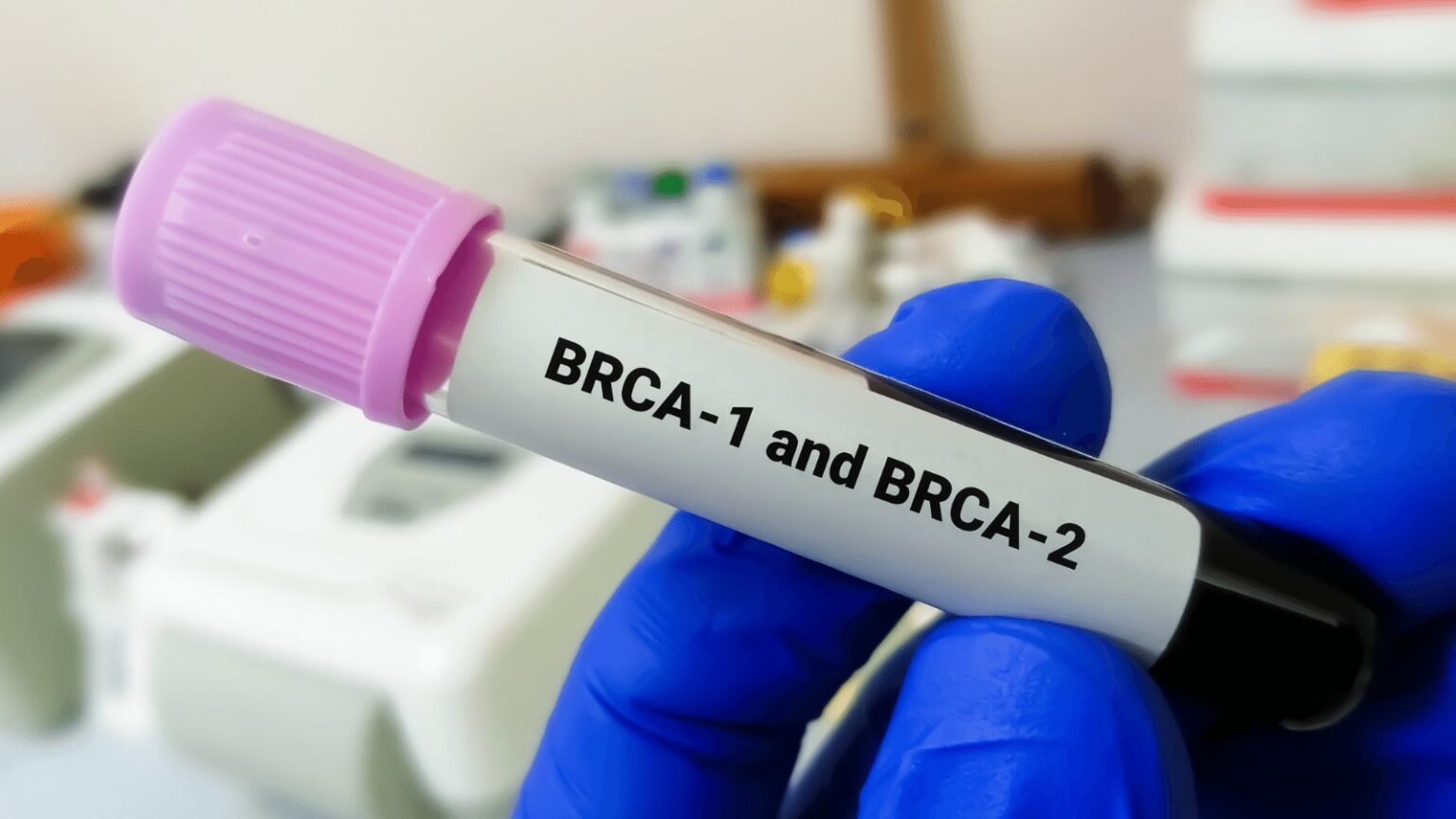
Cancer, genes and family history
Throughout our September awareness campaign, we’ve returned to one simple idea: some cancers can run in families. If you’ve ever wondered what that really means, and why we keep encouraging people to know their family health history, this article is for you.
It explains, in plain language, two genes you may have heard mentioned alongside breast, ovarian and prostate cancer: BRCA1 and BRCA2. It also explains something important and often overlooked: how little of what the world knows about these genes actually comes from African families — and why KAVI-ICR is working to change that.
The short version: BRCA1 and BRCA2 are genes we all carry. In some people, they are inherited in a changed form that raises the chance of certain cancers. Most cancers are not inherited, a changed gene is not a diagnosis, and knowing your family history is a powerful and completely free first step.
What are BRCA1 and BRCA2?
Our bodies are built and maintained using instructions carried in our genes, which we inherit from both of our parents. BRCA1 and BRCA2 (the name is short for BReast CAncer genes) are two of these. Despite the name, in every one of us they do a protective job: they help repair damage inside our cells and keep cells growing in an orderly way.
You can think of them as part of the body’s natural repair-and-maintenance team. When they work normally, they help guard against cancer, not cause it.
What a “BRCA change” means
Sometimes a person inherits a changed version of BRCA1 or BRCA2. Scientists call this a pathogenic variant or mutation. When the gene is changed in this way, it is less able to do its repair work, and over a lifetime the person has a higher chance of developing certain cancers — most notably breast and ovarian cancer in women, and prostate cancer in men. Breast cancer in men and pancreatic cancer are also linked to these genes, though less commonly.
Because the change is inherited, it can be passed down through both the mother’s and the father’s side of a family. That is why a pattern of cancers across several close relatives, especially at a younger age than usual, can be a clue that a family carries one of these changes.
“Higher chance” is not “certainty.” In studies (carried out mostly in European-ancestry families), women who inherit a BRCA1 or BRCA2 change have a substantially higher lifetime chance of breast cancer and a raised chance of ovarian cancer than other women; men have a higher chance of prostate cancer, particularly with BRCA2. But many carriers never develop cancer at all and knowing about a risk means there are extra steps a person and their doctor can take to watch for it early.
Who might carry a BRCA change?
BRCA changes are uncommon in the general population; most people do not carry one. Certain family patterns, though, make it more worth discussing with a healthcare provider. These include:
- Several close relatives with breast, ovarian, prostate or pancreatic cancer, especially on the same side of the family.
- Cancer at a young age, for example, breast cancer before 50.
- A relative with cancer in both breasts, or more than one type of these cancers in the same person.
- A known BRCA change already identified in a family member.
- Triple-negative breast cancer, a particular subtype that is more often linked to BRCA1.
None of these means a person has cancer, or definitely carries a BRCA change. They are simply signals that a conversation — and sometimes a referral — could be worthwhile.
The missing picture: why African data matters
Here is something most public articles about BRCA never mention. Almost everything the world “knows” about these genes was learned from people of European ancestry. African populations, despite carrying the greatest genetic diversity of any people on Earth, are dramatically underrepresented in genetic research.
2.4%
of people in a major global catalogue of genetic studies are of African ancestry
35 of 54
African countries had no published BRCA data in a continent-wide review
~9%
of African hereditary breast/ovarian cancer patients carried a BRCA change where data exists
Sources: NHGRI-EBI GWAS Catalogue analysis (2019); Africa-wide BRCA meta-analysis (2025). See References.
In one widely cited analysis, only about 2.4% of participants in a major international catalogue of genetic studies were of African ancestry — even though Africa is the birthplace of humankind and holds more genetic variation than anywhere else. Research tools built mostly on European data work less well for African families.
The picture is similar for BRCA specifically. A 2025 review that pooled every available African study found data from just 19 of Africa’s 54 countries — meaning 35 countries had none at all — and most of what existed came from a handful of nations in North and Southern Africa. Where data did exist, roughly 9 in 100 patients with hereditary breast or ovarian cancer carried a BRCA change (about 10.5% for BRCA1 and 5.5% for BRCA2). Still, the authors cautioned that the true burden is likely underestimated.
Why this is more than an academic problem
When a laboratory reads a person’s BRCA genes, it compares what it finds against international databases of known changes. If a person’s ancestry is missing from those databases, the lab more often finds a change it cannot yet classify — called a variant of uncertain significance, or VUS. The result is frustrating and unclear: neither reassuring nor actionable.
This is exactly what researchers see. In a large South African cohort of nearly 3,000 patients studied over 22 years, scientists identified BRCA changes in about 9% of those fully screened — and discovered founder mutations specific to African communities that international databases did not contain. Dozens of the variants they found were completely new to science, a direct consequence of “a lack of African data in the international context.”
The bottom line: the more African families take part in this research, the better the tests become — for them, for their relatives, and for future generations. Better data means fewer uncertain results and more answers that families can actually use.
What KAVI-ICR is doing
This is where our work comes in. At the KAVI Institute of Clinical Research, University of Nairobi, we are studying BRCA1 and BRCA2 in breast, ovarian, and prostate cancer in the Kenyan population. Early Kenyan work has already begun to look for these changes in patients here, for example, in women with triple-negative breast cancer, but the studies so far have been small, and much more is needed.
By building local knowledge, laboratory capacity and research partnerships, we aim to help ensure that Kenyan and African families are part of the global picture, not left out of it. Understanding how these genes behave in our own population is an important step toward earlier, fairer and more accurate cancer care.
What you can do: starting today
You don't need a genetic test or any special knowledge to take the most valuable first step. Here is where anyone can begin:
- Learn your family health history. Ask relatives on both sides which cancers, if any, have occurred, and at what ages. Write it down.
- Share it with a healthcare provider. They can advise whether your history suggests further discussion or referral would help.
- Keep up with awareness and screening. Knowing the signs and attending recommended checks matters for everyone, whatever your family history.
- Remember that testing is done through a clinician. Genetic testing, where appropriate, is always arranged, explained and interpreted by qualified health professionals, never a do-it-yourself exercise.
Three things to hold onto:
• Most cancers are not inherited; having cancer in the family does not mean a BRCA change caused it.
• Carrying a BRCA change raises the chance of cancer; it is not a diagnosis, and many carriers never develop cancer.
• Knowing your family history is free, powerful, and something you can do this week.
References
1. Kuchenbaecker KB, Hopper JL, Barnes DR, et al. Risks of Breast, Ovarian, and Contralateral Breast Cancer for BRCA1 and BRCA2 Mutation Carriers. JAMA. 2017;317(23):2402–2416. (Lifetime cancer-risk estimates for BRCA carriers, based largely on European-ancestry cohorts.)
2. Sirugo G, Williams SM, Tishkoff SA. The Missing Diversity in Human Genetic Studies. / Bentley AR, Callier SL, Rotimi CN. Evaluating the promise of inclusion of African ancestry populations in genomics. npj Genomic Medicine. 2019;4:5. (Only ~2.4% of participants in the NHGRI-EBI GWAS Catalogue were of African ancestry; Africa harbours the greatest human genetic diversity.)
3. Mapping the Prevalence of BRCA1 and BRCA2 Mutations in Hereditary Breast and Ovarian Cancer Across Africa: A Systematic Review and Meta-Analysis. Asian Pacific Journal of Cancer Prevention. 2025. (52 studies from only 19 of 54 African countries; pooled BRCA prevalence ~9.0%, BRCA1 ~10.5%, BRCA2 ~5.5%; African populations remain underrepresented in genomics cancer research.)
4. Van der Merwe NC, Combrink HM, Ntaita KS, et al. Prevalence of Clinically Relevant Germline BRCA Variants in a Large Unselected South African Breast and Ovarian Cancer Cohort: A Public Sector Experience. Frontiers in Genetics. 2022;13:834265. (~9% BRCA-positive among those fully screened; African founder variants and numerous novel variants of uncertain significance attributed to a lack of African data internationally.)
5. Nyaga DM, et al. BRCA1 and BRCA2 mutations and their clinical relevance in selected women diagnosed with triple-negative breast cancer in Kenya: a descriptive cross-sectional study. Pan African Medical Journal. 2023;45:102. (Early, small Kenyan study of BRCA in triple-negative breast cancer, illustrating the need for larger local cohorts.)
6. Global Cancer Observatory (GLOBOCAN) 2024, International Agency for Research on Cancer (IARC/WHO) — Kenya fact sheet. (National cancer incidence and mortality estimates.)
- Log in to post comments


