
KAVI-Institute of Clinical Research (KAVI-ICR) hosted Professor Jon Frampton of the University of Birmingham and Dr. Samuel Omolo of the Pan African Institute of Genomic Sciences for shared ground in stem cell biology, cancer research, immunology and health data science — and opened discussions on joint grants and long-term partnership.
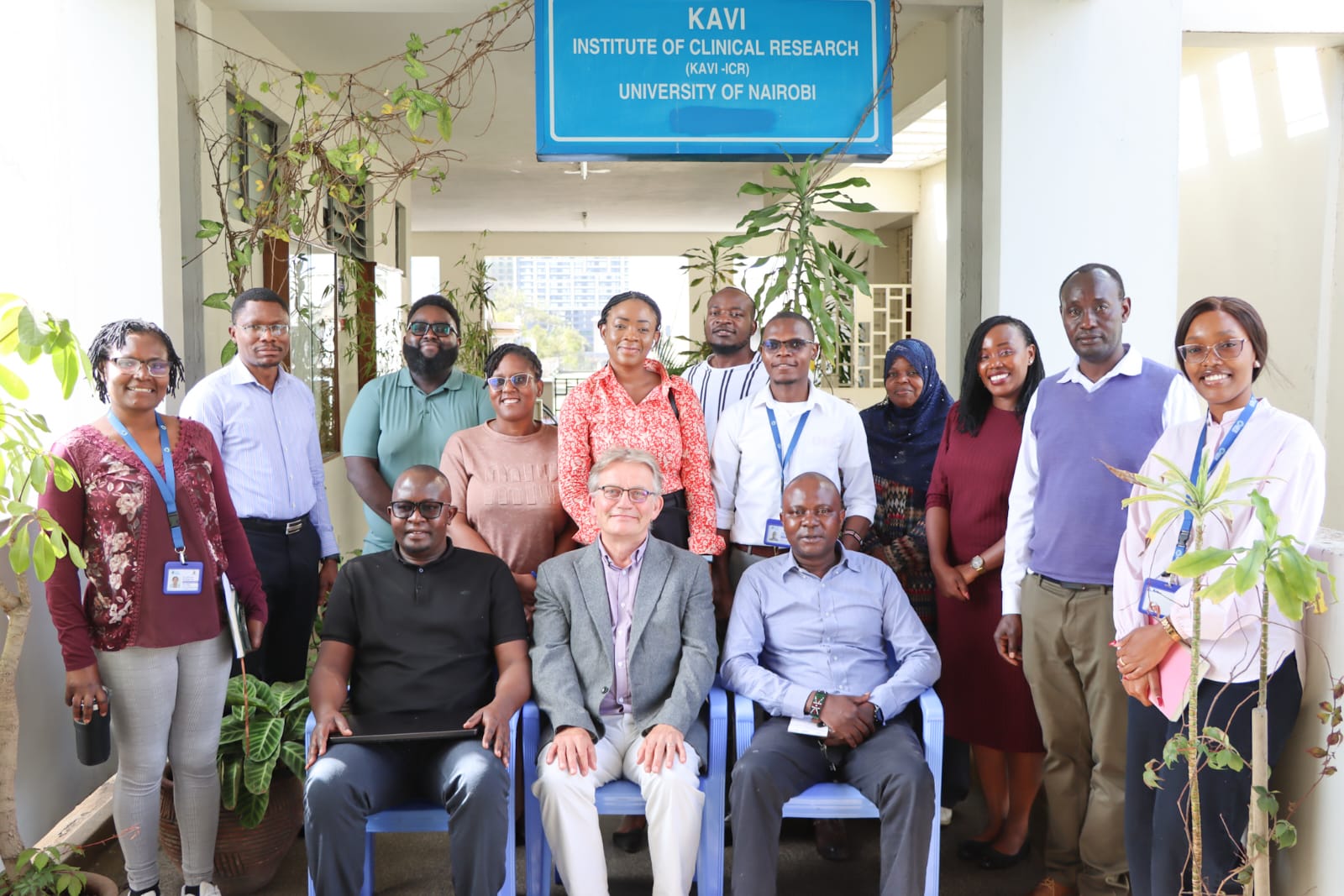
[Nairobi] — KAVI-Institute of Clinical Research (KAVI-ICR), part of the Faculty of Health Sciences at the University of Nairobi, welcomed Professor Jon Frampton, Professor of Stem Cell Biology and Head of Global Partnerships in the College of Medicine & Health at the University of Birmingham for a wide-ranging research visit. He was accompanied by Dr. Samuel Omolo, Founder & CEO of the Pan African Institute of Genomic Sciences (PAIGS), a Nairobi-based institute advancing human and pathogen genomics across the continent.
Professor Frampton opened the exchange with an overview of the University of Birmingham and its College of Medicine & Health, one of the UK's leading centres for medical research, and its strengths across cancer and genomic sciences, immunology, health data science and global health. He then turned to his own laboratory's work on the MYB transcription factor — a master regulator of blood-forming (haematopoietic) stem cells. His group studies how inherited variation in MYB activity, present in an estimated 15–20% of people, can influence stem cell function, ageing and the risk of blood disorders and cancer over the life course.
KAVI-ICR, in turn, mentioned the breadth of its own research. Built on a foundation of HIV vaccine science, the Institute's expertise now spans basic and discovery sciences, clinical trials, infectious diseases — with particular strength in HIV — immunology, and one health and zoonoses. Increasingly, that portfolio also reaches into non-communicable diseases (NCDs), with an emerging focus on cancer biology and stem cell research. The Institute also set out its ambition to grow its bioinformatics and data science capacity, the analytical backbone of precision and population-scale health research.
The discussion revealed a striking convergence. Cancer and genomics, stem cell biology, immunology and immunotherapy, health data science, diagnostics, global health, antimicrobial resistance and vaccines all featured prominently on both sides — pointing to natural avenues for collaboration that build on each institution's distinctive strengths.
Dr. Samuel Omolo situated the discussion within a continental agenda. Africa holds the greatest human genetic diversity on the planet yet remains the most under-represented in genomic research; PAIGS works to close that gap through research focused on African populations, locally relevant genomic tools, and building genomics and bioinformatics capacity. His participation underscored a shared commitment to equitable, Africa-led science.
The visit included a tour of KAVI-ICR's laboratories and a discussion on next steps such as areas of future collaboration and joint grant writing chief among them. In attendance were senior members of KAVI-ICR, including Dr. Daniel Muema, Dr. Terry Muhomah, Dr. Moses Masika and Dr. Noel Onyango, alongside other research fellows and scientists, together with colleagues from other departments in the Faculty of Health Sciences at the University of Nairobi.
- Log in to post comments


