
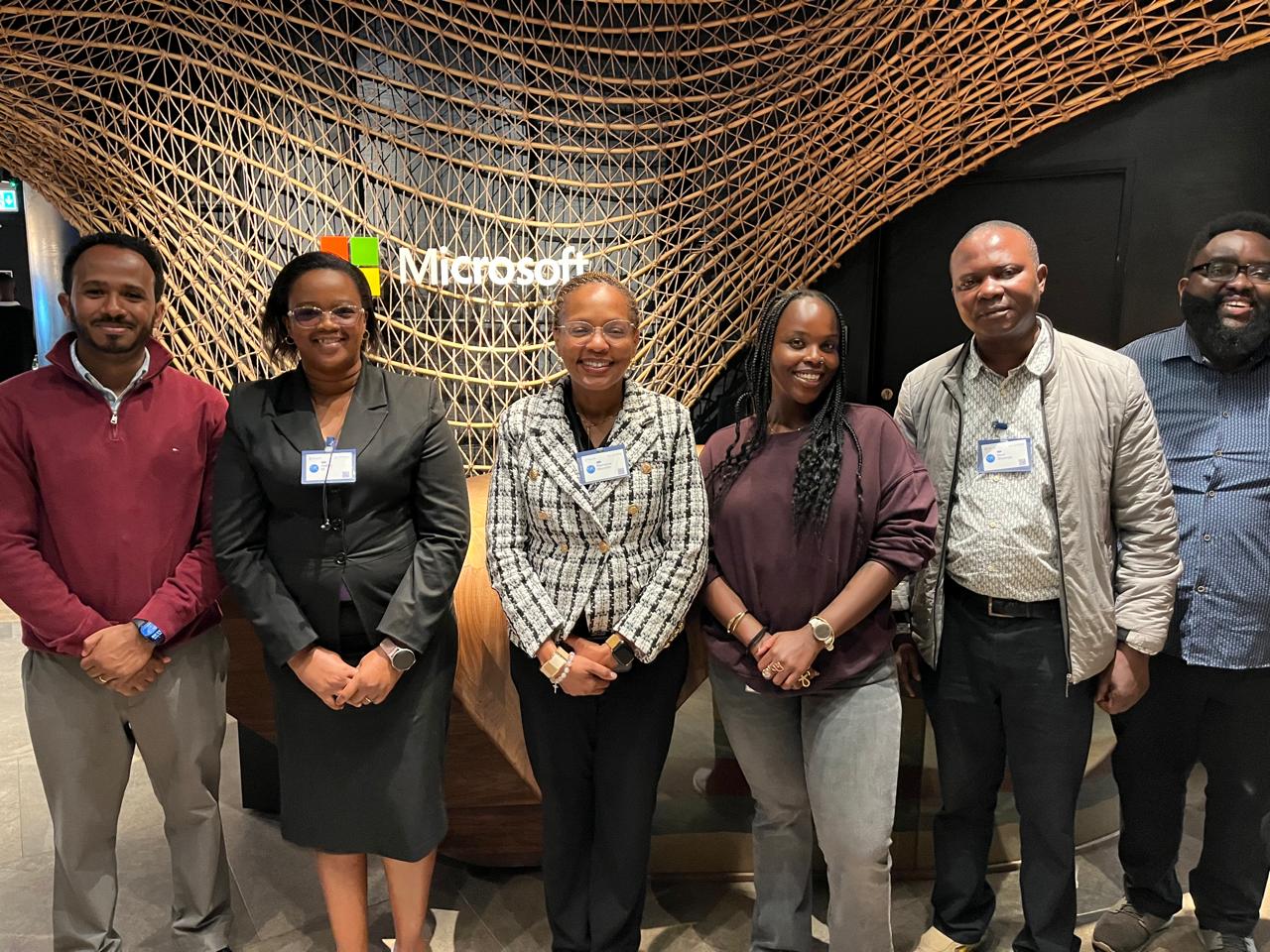
The KAVI-Institute of Clinical Research (KAVI-ICR) recently visited the Microsoft AI for Good Lab in Nairobi. The meeting provided an opportunity to exchange ideas at the intersection of artificial intelligence and public health research and to understand each other’s work better.
The KAVI-ICR delegation, led by the director, Dr Marianne Mureithi, included Dr Noel Onyango, Dr Hellen Muringi Mwaura and George Ichoho. Manager & Principal Research Scientist Dr. Girmaw Abebe Tadesse and Product Manager Tunu Wamai hosted them. The engagement focused on sharing insights into each institution’s work and discussing areas of mutual interest, including how artificial intelligence is being applied across different research contexts.
During the discussions, the KAVI-ICR team highlighted key areas where AI could significantly enhance medical, clinical, and discovery science research, as well as health systems strengthening. These include pandemic preparedness, monoclonal antibody development, biomarker discovery, vaccine research, cancer screening, and geospatial mapping of diseases. Such applications could enable more precise data analysis, improved disease surveillance, and accelerated discovery of new interventions.
Dr. Tadesse provided insights into how advanced AI techniques, combined with cloud computing, large datasets, and machine learning, can support complex health research initiatives. The Microsoft AI for Good Lab is dedicated to applying AI technologies to address societal challenges in areas such as health, climate resilience, and disaster preparedness.
The meeting highlighted the growing role of AI-driven research ecosystems in Kenya and across Africa. Nairobi has become a regional hub for technological innovation, bringing together engineers, data scientists, and researchers to develop solutions to local and global challenges.
Both teams discussed how collaboration among medical and clinical researchers and AI experts can accelerate the translation of scientific discoveries into actionable solutions that improve population health, strengthen health systems, and generate data to inform evidence-based policymaking.
Dr. Marianne Mureithi, Director of KAVI-ICR, emphasised the importance of interdisciplinary partnerships:
“Artificial intelligence has immense potential to transform our research and public health. Through engagement with partners such as the Microsoft AI for Good Lab, we can harness advanced technologies to strengthen pandemic preparedness, accelerate vaccine and therapeutic development, and generate high-quality data that supports evidence-based health policies for our region.”
The visit provided an opportunity for dialogue and knowledge exchange among teams working at the intersection of AI and public health, integrating medical research expertise with advanced AI capabilities to help drive innovative solutions to some of Africa’s most pressing health challenges
- Log in to post comments


