
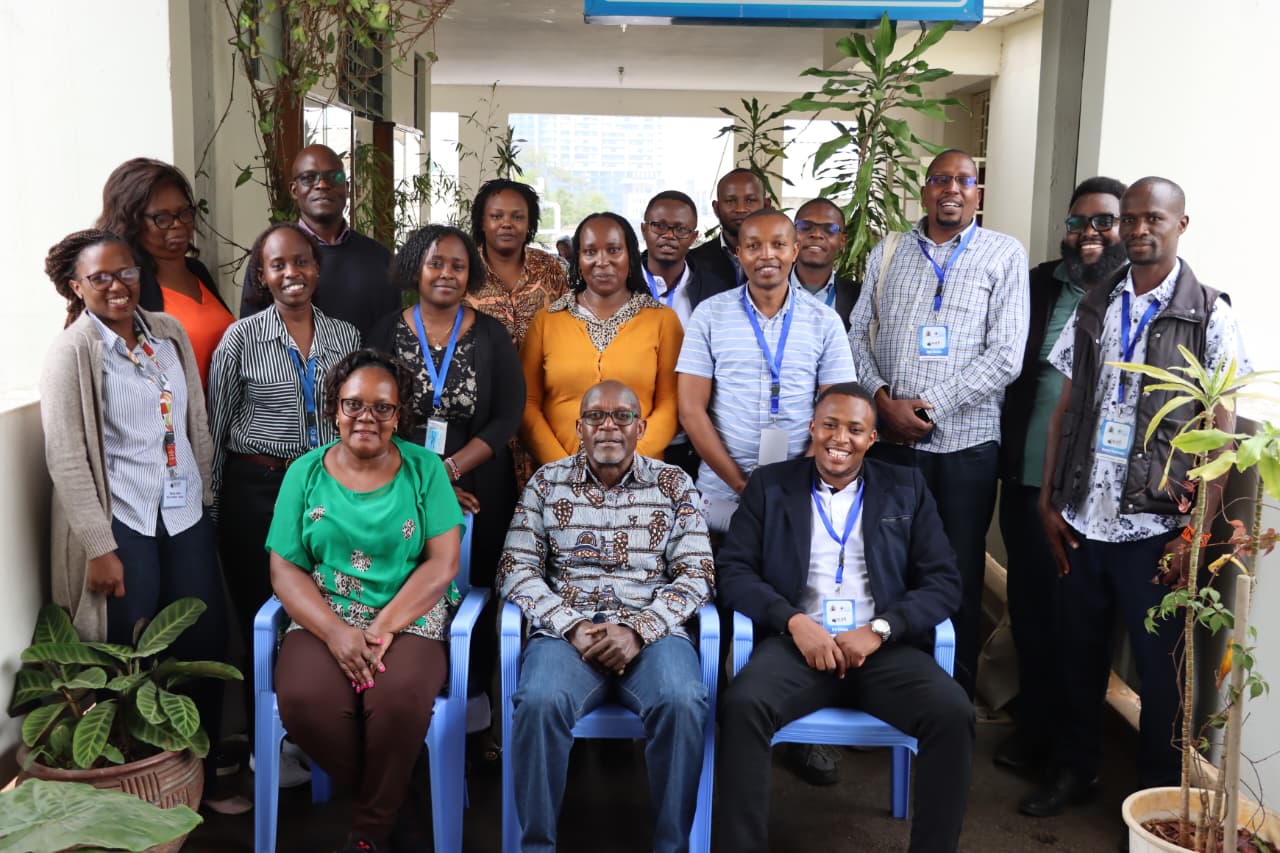
Clinical and laboratory teams from Mbagathi County Hospital and Loitokitok Sub-County Hospital completed a week of intensive training before the dry run on 10 July 2026.
The Kenyan arm of the ZAFI study reached an important milestone this month with a five-day site initiation and training programme at KAVI-ICR in Nairobi.
Held from 6 to 10 July 2026, the initiation brought together clinical and laboratory staff from the study’s two Kenyan sites: Mbagathi County Hospital in Nairobi and Loitokitok Sub-County Hospital in Kajiado County. Across the week, doctors, clinical officers, laboratory technologists and research staff worked through the procedures, standards and documentation that will underpin the study at both sites.
The ZAFI study, Zoonotic Causes of Acute Febrile Illness, is investigating what lies behind fever in children. Fever is one of the most common reasons a child is brought to hospital in the region, yet a specific cause is often never identified. Many of the infections responsible are zoonotic, meaning they pass between animals and people, and they can be hard to tell apart on symptoms alone. By pairing careful clinical assessment with laboratory testing at the KAVI-ICR reference laboratory, the study aims to build a clearer picture of what is actually making children unwell, and in turn to strengthen how febrile illness is diagnosed and managed.
The training covered the full breadth of good clinical and laboratory practice. Early sessions dealt with the ethical foundations of research and the responsibilities of investigators, sponsors and ethics committees, alongside a refresher on ICH GCP. Later days moved to community engagement, recruitment and retention, data management and good documentation practice, and the informed consent process. Laboratory sessions worked through sample collection, labelling, processing, storage and transport, together with infection prevention and control, malaria rapid diagnostic testing, and the communication of results. Teams also covered safeguarding, serious adverse event reporting and escalation pathways before rehearsing the study’s procedures from start to finish.
On the final day, the teams moved to Mbagathi County Hospital, where an enrolment dry run took place
Funding Acknowledgement
This research is funded by the NIHR (NIHR156365) using UK international development funding from the UK Government to support global health research.
- Log in to post comments


