
As the world marks World Tuberculosis Day on March 24th, KAVI-Institute of Clinical Research reaffirms its commitment to raising awareness, promoting early diagnosis, and supporting effective treatment of tuberculosis (TB). Tuberculosis remains one of the world’s deadliest infectious diseases, with millions of new cases reported annually. Despite progress, global reductions in TB incidence remain below targets, highlighting the urgent need for intensified action.
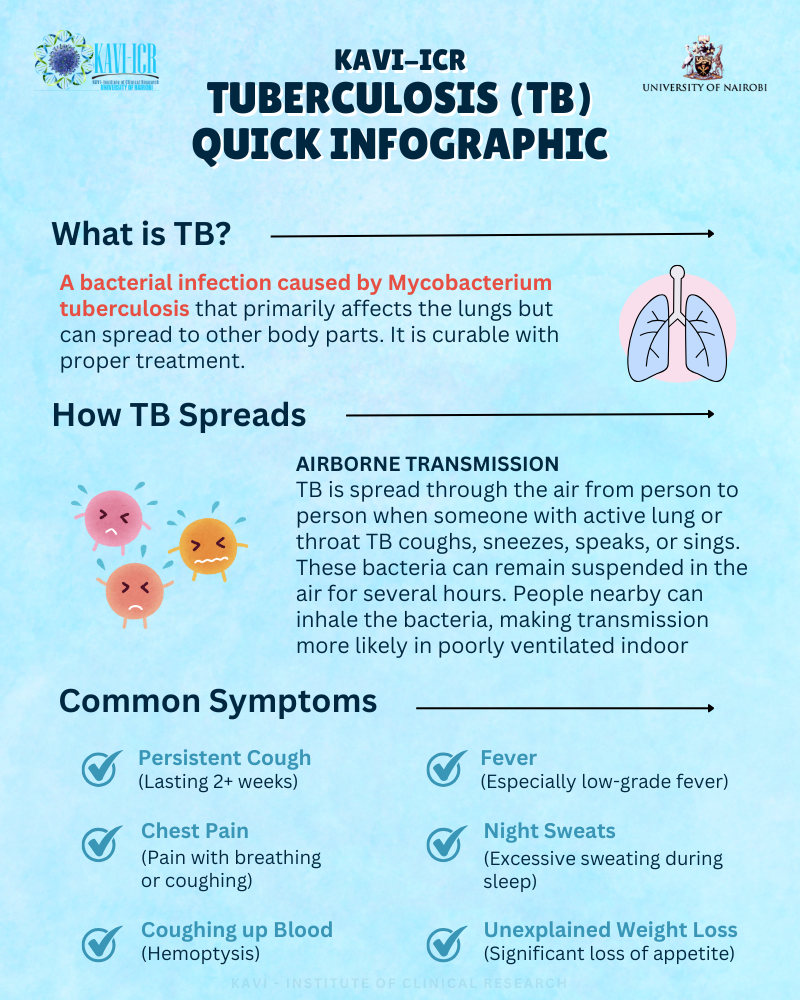
Tuberculosis remains a major public health concern, yet it is both preventable and curable. Caused by bacteria that primarily affect the lungs, TB spreads through the air when an infected person coughs, sneezes, or speaks. Contrary to common misconceptions, it is not transmitted through shared food, surfaces, or physical contact.
In Kenya, TB continues to pose a significant public health challenge. The country is among the high-burden nations globally, although notable progress has been made in recent years.
- In 2024, over 96,000 TB cases were notified, with treatment coverage rising to 77%.
- TB incidence has declined significantly, with reductions approaching global End TB targets.
- Kenya is among countries close to achieving key WHO milestones in reducing TB incidence and deaths.
Recognizing the symptoms early is critical. A persistent cough lasting more than two weeks, fever, chest pain, night sweats, coughing up blood, and unexplained weight loss are key warning signs that should prompt immediate medical attention.
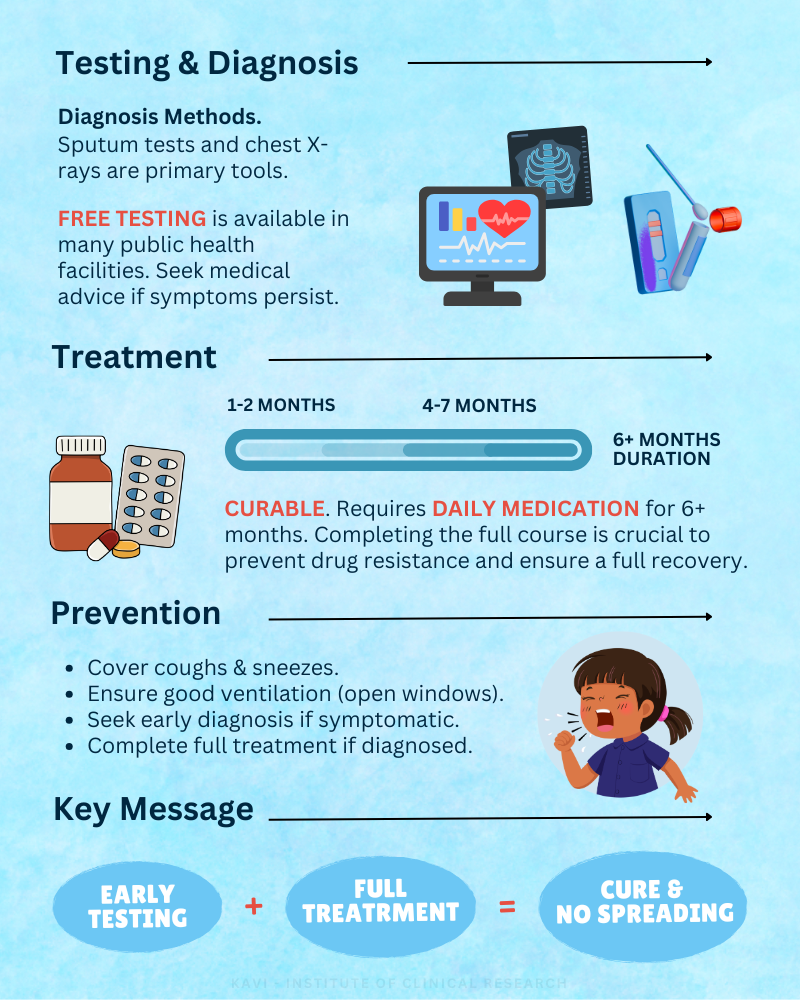
Diagnosis is accessible and often free in many public health facilities, using sputum tests and chest X-rays. Once diagnosed, TB can be successfully treated with a strict daily medication regimen lasting at least six months. Completing the full course of treatment is essential to prevent drug resistance and ensure full recovery.
Prevention starts with simple but powerful actions: covering coughs and sneezes, improving ventilation, seeking early testing, and adhering fully to prescribed treatment.
This World Tuberculosis Day, KAVI-ICR calls on individuals, communities, and partners to act decisively: test early, treat fully, and stop the spread of TB.
- Log in to post comments


